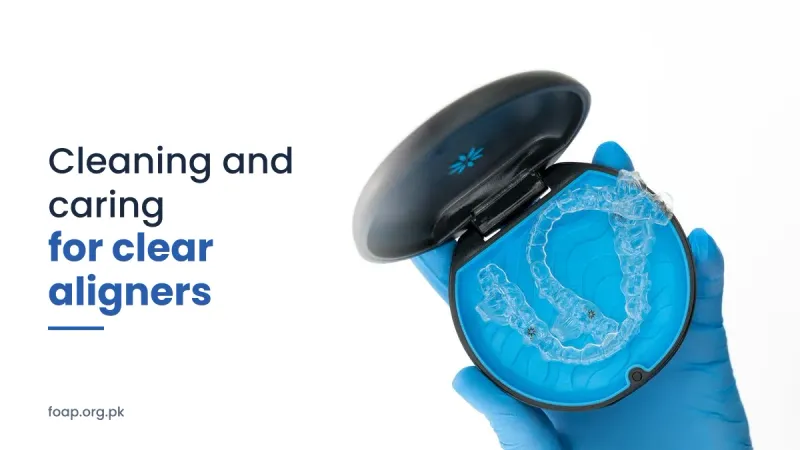
Pain and Discomfort During Aligner Treatment: Patient Guide

One of the first questions people ask before starting clear aligners is simple: will it hurt? The honest answer is that most people feel some soreness, especially at the start and for a day or two after each new tray. For most, it is a dull pressure rather than sharp pain, and it settles quickly.
This guide explains why aligners cause discomfort, what the research says about how much and for how long, practical ways to make the first days easier, and the signs that mean you should stop guessing and call your dentist.
Why moving teeth feels sore
Each tooth sits in a socket of bone, held by a thin cushion of fibres called the periodontal ligament. When an aligner presses on a tooth, that cushion is squeezed on one side and stretched on the other. The body responds by remodelling the bone around the root so the tooth can shift. That process involves mild inflammation, and inflammation is what you feel as tenderness.
So the ache is not a sign that something has gone wrong. It is a sign that the tray is doing its job. Each aligner is designed to move teeth only a small distance, which is why the pressure fades as the teeth catch up with the shape of the tray.
What the discomfort usually feels like
People describe aligner soreness in a few common ways:
- Pressure or tightness. The new tray feels snug, as if it is squeezing your teeth. This is the most common feeling.
- Tender teeth when biting. Chewing firm food can feel uncomfortable for the first day or two of a new tray.
- Slightly loose teeth. Teeth may feel a little mobile while they move. This is expected and settles when treatment finishes and retainers are worn.
- Sore spots on the gums, cheeks or tongue. A rough or sharp edge on the tray, or a small tooth-coloured bump called an attachment, can rub the soft tissues.
- Headache or jaw tiredness. Some people clench on their aligners, especially in the first weeks, and feel it in their jaw muscles.
What the research says about how much it hurts
Pain is personal, and studies measure it with simple scales where patients mark how sore they feel. Even so, a few findings are fairly consistent.
Soreness peaks early, then fades
In a study of 64 patients in Saudi Arabia, pain scores were recorded at four hours, one day, three days and seven days after the appliances were fitted. Soreness was highest at 24 hours and lowest by day seven, for both aligners and fixed braces. Fewer of the aligner patients reported pain, and their average scores were lower throughout that first week (Almasoud, 2018).
A study of adults followed patients for three months. In both groups, the effect of treatment on comfort and daily life tended to ease after the first 24 to 48 hours, and pain was affected more in the braces group than in the aligner group (Plaza-Ruíz et al., 2025).
Aligners compared with braces
A systematic review that pooled the available comparisons found, with a moderate level of certainty, that people wearing one aligner brand reported less pain than people with fixed braces in the first few days of treatment. After that, up to three months, the difference was no longer seen. The authors also pointed out that the cases studied were mostly mild, and that how well treatment works matters more than small differences in comfort (Cardoso et al., 2020).
What happens over months, not days
A study of 87 adults in the United States followed both groups across six months of appointments. Two days after the very first appointment, both groups reported similar pain. Later on, the braces group had more pain after several visits, because each new wire or adjustment restarted the soreness. In the aligner group, pain stayed at a low level throughout (Chan et al., 2024).
Put simply: expect the first week to be the most noticeable, expect a short return of tightness with each new tray, and expect it to become more familiar and less bothersome as treatment goes on.
How to make the first days easier
Most aligner discomfort can be handled at home. These steps help many people:
- Change trays at night. Putting a new aligner in just before bed lets you sleep through the first few hours of the tightest feeling.
- Keep wearing the tray. It is tempting to leave a sore aligner out for a while, but that lets teeth drift back and makes the next fitting hurt again. Full wear, as your dentist advises, keeps the pressure gentle and steady.
- Choose soft foods for a day or two. Daal, khichdi, yoghurt, eggs, soups and well-cooked rice are easier on tender teeth than nuts, hard bread or tough meat. Always remove aligners before eating.
- Try cool water or something cold. A cold drink with the aligners out, or a cold compress on the cheek, can calm the ache.
- Use orthodontic wax on rough spots. A small piece pressed onto a sharp edge or attachment protects the cheek until your dentist can smooth it.
- Rinse with warm salt water. This can soothe small sore patches on the gums or cheeks.
- Ask about pain relief. If you need a painkiller, ask your dentist or pharmacist which over-the-counter medicine suits you, and follow the dose on the pack. Tell them about any health conditions or other medicines you take.
Your dentist may also give you small plastic or foam "chewies" to bite on for a few minutes. These help press a new aligner fully onto the teeth, and some people find that gentle biting eases the pressure.
Why some appointments may feel sorer than others
Not every tray feels the same. A few parts of treatment can bring a little extra tenderness:
- Attachments. When the small tooth-coloured bumps are first bonded, the next tray may grip harder than usual. Our article on attachment design in aligners explains what they do.
- Reshaping between teeth. If your dentist polishes a fraction of a millimetre of enamel between teeth to create space, the gums nearby can feel tender for a day or so. You can read more about interproximal reduction.
- Elastics. Small rubber bands used to correct the bite can make the jaw feel tired at first.
- Refinement trays. A fresh set of aligners after a new scan can feel tighter than the trays you were used to.
When soreness is not normal
Ordinary aligner discomfort is dull, comes in waves with each new tray, and improves within a few days. Contact your dentist promptly if you notice any of the following:
- Sharp, throbbing or constant pain in one tooth, especially if it wakes you at night
- Pain that is getting worse rather than better after several days
- Swelling of the gum, face or jaw, or a bad taste or pus near a tooth
- A tooth that feels very loose or that hurts sharply when you bite down
- An aligner that no longer fits, cracks, or leaves a deep cut in your cheek or tongue
- Clicking, locking or pain in the jaw joint that is new or getting worse
- Sensitivity to hot or cold that lingers, which may point to decay or a cracked filling
These signs can have causes that need treatment, such as an infection, a cracked tooth or a tray that is pushing in the wrong place. They are also one reason aligners should be supervised by a dentist rather than ordered online without an examination. Our guide on the risks of DIY aligners covers this in more detail.
Will it hurt at the end of treatment?
Once active tooth movement stops, the regular pressure stops too. Retainers usually feel snug for the first few nights, and then become routine. If a retainer suddenly feels very tight after you have missed a few nights, that is a sign teeth have started to shift back. Wear it as instructed and tell your dentist. Our guide to retention after aligner treatment explains why this stage matters so much.
Talk to your dentist
A little soreness is part of moving teeth, and for most people it is easy to manage and short-lived. What helps most is knowing what to expect, keeping up with wear, and having a dentist who can check your teeth if something feels wrong. Thinking about clear aligners, or already wearing them and unsure whether a particular ache is normal? Book a visit with a qualified dentist or orthodontist so they can look at your teeth and gums directly and give you advice that fits your mouth.
References
- Cardoso PC, Espinosa DG, Mecenas P, Flores-Mir C, Normando D. Pain level between clear aligners and fixed appliances: a systematic review. Progress in Orthodontics. 2020. https://doi.org/10.1186/s40510-019-0303-z
- Chan V, Shroff B, Kravitz ND, Carrico C, Hawkins D, Tran P, Lindauer S. Orthodontic pain with fixed appliances and clear aligners: a 6-month comparison. American Journal of Orthodontics and Dentofacial Orthopedics. 2024. https://doi.org/10.1016/j.ajodo.2024.07.002
- Almasoud NN. Pain perception among patients treated with passive self-ligating fixed appliances and Invisalign aligners during the first week of orthodontic treatment. Korean Journal of Orthodontics. 2018. https://doi.org/10.4041/kjod.2018.48.5.326
- Plaza-Ruíz SP, Barrera-Chaparro JP, Echeverría-Zarama A, Rojas-Román MP, Susa-Valencia KS. Oral health-related quality of life and pain perception among adult patients treated with clear aligners: a longitudinal prospective study. Dental Press Journal of Orthodontics. 2025. https://doi.org/10.1590/2177-6709.30.2.e2524169.oar
This article is general information for patients and is not a substitute for an examination and advice from a qualified dentist.